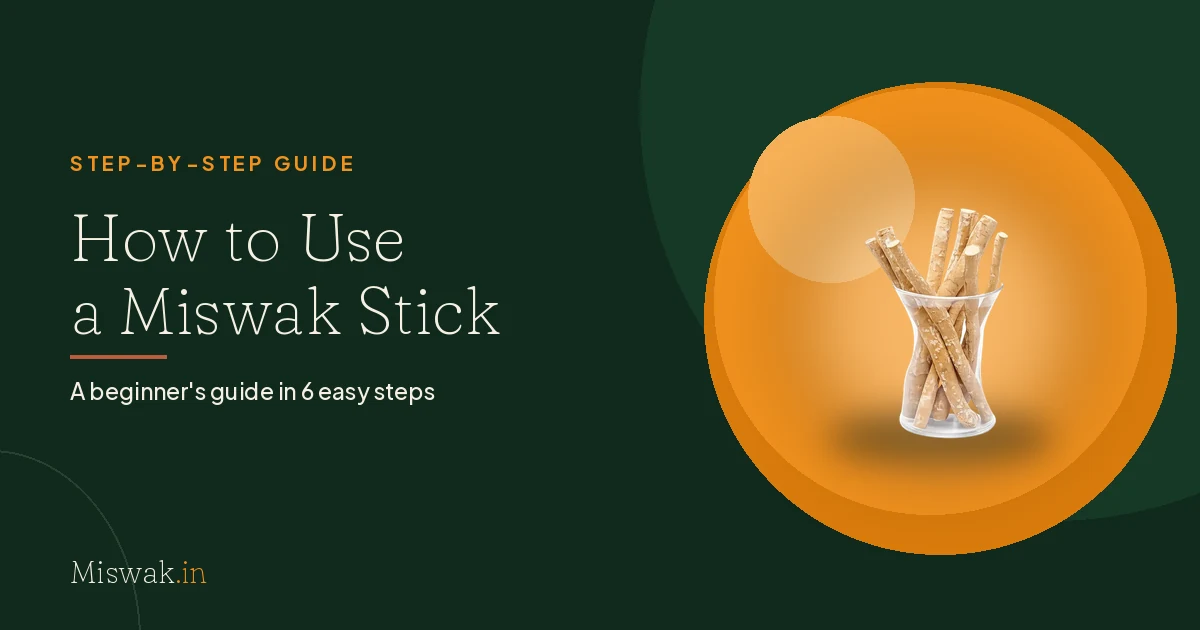
Using a miswak stick is simple: peel about 1 cm of bark from the tip, chew it gently until the fibres soften into bristles, then brush your teeth in small circular and vertical motions — no water or toothpaste required. A single stick lasts one to two weeks, and you simply trim the worn tip every few days to keep it fresh. Below is the full step-by-step guide, plus tips to get the cleanest results and avoid common beginner mistakes.
Before you start
Miswak (also called siwak, datun, or peelu) is a natural teeth-cleaning stick made from the Salvadora persica tree. Unlike a toothbrush, it cleans your teeth and releases natural antibacterial compounds as you use it. If you're new to it, it helps to understand what miswak does and why it works first.
How to use a miswak stick (step by step)
- Peel the tip. Strip about 1 cm (roughly a fingernail's width) of bark from one end of the stick to expose the inner fibres.
- Soften it into bristles. Gently chew the peeled tip for a minute, or soak it in water, until the fibres separate into soft, brush-like bristles.
- Brush your teeth. Hold the miswak like a pen. Brush in short vertical strokes (gum to tooth) and small circular motions, covering the front, back and chewing surfaces of every tooth for about two minutes.
- Clean along the gumline. Angle the bristles slightly toward the gums to gently massage them and remove plaque where teeth meet gums.
- Rinse. Rinse your mouth and rinse the bristles under water. No toothpaste is needed, though you can use it if you prefer.
- Trim and refresh. Every 2–3 days, snip off the frayed bristles and peel a fresh tip so the stick stays clean and effective.
How often should you use miswak?
You can use miswak just like a toothbrush — twice a day, morning and night. Many people also use it between meals because it needs no water or sink, which makes it easy to freshen up anywhere. Daily use is safe and recommended.
Tips for beginners (and mistakes to avoid)
- Go gentle. Don't press hard — light pressure protects your gums and still cleans well.
- Don't peel too much. Expose only a small tip; peeling a long section wastes the stick.
- Keep the bristles short. Soft, short bristles clean better than a long frayed tuft.
- Let it dry between uses. Store it upright in the open air, not sealed in a wet container.
- Give it a few days. The slightly peppery taste is normal and fades as you get used to it.
How to keep your miswak fresh
Rinse the stick after each use and store it tip-up in a dry, ventilated spot so it doesn't stay damp. If the tip dries out and hardens, just soak it in water for a few minutes before your next use. Trimming every couple of days keeps it hygienic, and one stick typically lasts one to two weeks.
Miswak vs a toothbrush
Wondering whether miswak can fully replace your brush? Studies suggest it cleans plaque just as well when used correctly, with added natural benefits. See the full comparison: Miswak vs Toothbrush: Which Is Better for Teeth?
Where to get a good miswak stick
For the best results you need a fresh, authentic stick. At Miswak.in we sell 100% natural Salvadora persica (peelu) miswak, with packs starting at ₹559 for a 4-piece pack and free delivery across India. Shop authentic miswak sticks →
Frequently asked questions
Do you need water or toothpaste with miswak?
No. Miswak works on its own — the chewed fibres and natural compounds clean your teeth without water or toothpaste. You can add either if you like, but neither is required.
How long does one miswak stick last?
With daily use and regular trimming, a single stick usually lasts one to two weeks before you need a new one.
Can you use miswak on the go?
Yes — that's one of its biggest advantages. Since it needs no water or sink, you can keep one in your bag or pocket and freshen up anywhere.
Is the taste of miswak normal?
Yes. Miswak has a mild, slightly peppery taste that comes from its natural oils. It's completely normal and most people enjoy it within a few days.
Can children use miswak?
Children can use miswak under adult supervision. Use a thinner stick, keep the bristles soft, and make sure they brush gently.