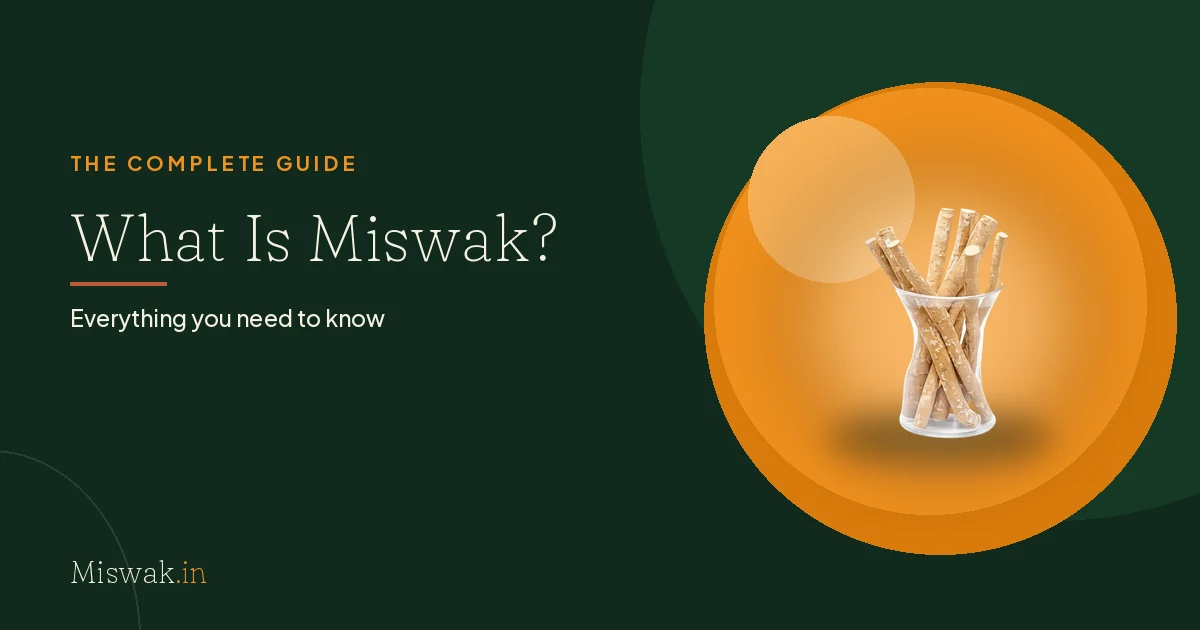
Miswak is a natural teeth-cleaning stick made from the Salvadora persica tree, used for thousands of years as a chemical-free alternative to the toothbrush. When you chew the tip, it splays into soft bristles that clean the teeth, while the wood releases natural antibacterial compounds, fluoride and minerals. Also known as siwak, datun, peelu or arak, miswak cleans teeth, freshens breath, strengthens gums and is fully biodegradable. This guide covers everything you need to know.
What is miswak made of?
Miswak comes from the twigs and roots of the Salvadora persica tree, often called the "toothbrush tree" or peelu/arak tree. It grows across India, the Middle East and Africa. The wood is naturally rich in compounds that benefit oral health, which is why a simple twig can clean teeth as effectively as a brush and paste.
Other names for miswak
Depending on the region and language, miswak is known by several names:
- Siwak — the Arabic term, common in Islamic tradition.
- Datun — the common Hindi word for a natural teeth-cleaning twig.
- Peelu / Arak — names for the Salvadora persica tree itself.
- Toothbrush tree — its common English name.
How does miswak work?
Miswak cleans in two ways at once. The soft fibres physically scrub away plaque and food, like a brush — and the natural compounds in the wood act chemically against the bacteria that cause decay and gum disease. This dual action is what sets it apart from an ordinary toothbrush. Learn more in our miswak vs toothbrush comparison.
What are the benefits of miswak?
Miswak fights plaque, reduces harmful bacteria, strengthens gums, freshens breath, helps whiten teeth and is completely natural and eco-friendly. For the full, detailed list, read our guide to the benefits of miswak for teeth and gums.
How do you use miswak?
In short: peel the tip, chew it into bristles, and brush in small circular and vertical motions — no water or toothpaste needed. For the complete walkthrough with tips, see how to use a miswak stick.
Miswak in Islam
Miswak holds special importance in Islam as a strongly recommended Sunnah of the Prophet Muhammad ﷺ, used before prayer, wudu and at many other times. Read more about miswak in Islam — the Sunnah and hadith.
Is miswak good for everyone?
Yes — miswak is safe for adults, and for children under supervision. It suits people who want a natural, chemical-free routine, and it's especially handy because it needs no water or sink, making it easy to use anywhere.
Where to buy authentic miswak in India
Quality matters: a fresh, genuine stick works best. At Miswak.in we sell 100% natural Salvadora persica (peelu) miswak, with packs starting at ₹559 for a 4-piece pack and free delivery across India. Shop authentic miswak sticks →
Frequently asked questions
What is miswak in English?
Miswak is a natural teeth-cleaning stick from the Salvadora persica tree, sometimes called the "toothbrush tree." It's used like a toothbrush but needs no paste or water.
Is miswak and datun the same thing?
Datun is the general Hindi word for a natural teeth-cleaning twig (which can be neem, babool or peelu). Miswak specifically means the peelu (Salvadora persica) datun, which is considered the most effective.
Does miswak actually clean teeth well?
Yes. Studies suggest miswak removes plaque as effectively as a toothbrush when used correctly, with the bonus of natural antibacterial compounds.
How long does a miswak stick last?
With daily use and trimming the tip every few days, one stick typically lasts one to two weeks.