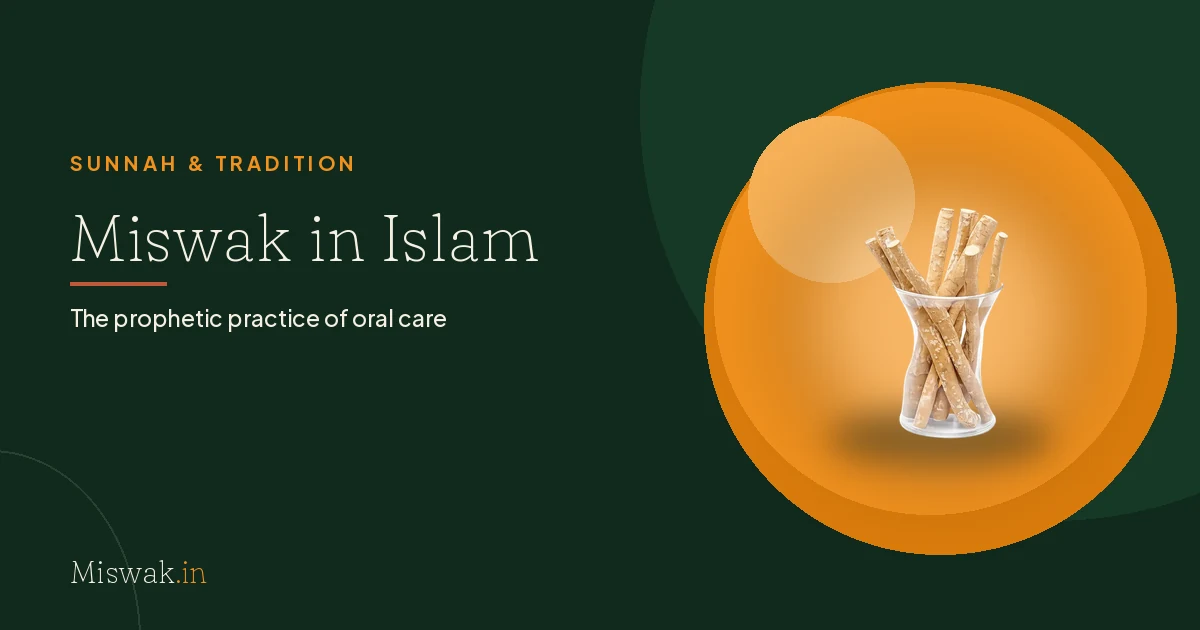
In Islam, using the miswak (siwak) is a highly recommended sunnah — a practice the Prophet Muhammad ﷺ loved, encouraged, and performed throughout the day. He is reported to have said that were it not for the hardship it might cause his community, he would have commanded the use of the miswak before every prayer. Beyond its spiritual reward, miswak keeps the mouth clean and fresh, which is why it has remained part of Muslim daily life for over fourteen centuries. Here's what Islam teaches about miswak, when to use it, and how.
What does Islam say about miswak?
The miswak is described in the authentic traditions as something that "cleanses the mouth and pleases the Lord." The Prophet ﷺ used it so regularly that it became one of his well-known habits — upon waking, before prayer, before entering his home, and at many other times. While it is not obligatory (fard), it is a strongly emphasised sunnah that carries reward when done with good intention, alongside its clear hygienic benefit.
The hadith on miswak
Several authentic narrations, recorded in collections such as Sahih al-Bukhari, Sahih Muslim and Sunan an-Nasa'i, highlight the importance of miswak. Their meanings include:
- The Prophet ﷺ indicated he would have made miswak obligatory before every prayer were it not for fear of hardship on his ummah.
- The miswak purifies the mouth and is pleasing to Allah.
- When he woke at night, the Prophet ﷺ would clean his mouth with the miswak.
These narrations show miswak as both an act of worship-linked cleanliness and a practical Sunnah of self-care.
When is miswak recommended?
- Before each prayer (salah) and when performing wudu (ablution).
- Upon waking from sleep.
- Before reciting the Qur'an.
- On Fridays, before Jumu'ah prayer.
- Before entering the home and before gatherings.
- When the mouth's odour changes — after eating strong foods, or after long periods without eating.
Can you use miswak while fasting?
Using miswak while fasting is permitted, and many scholars consider it part of the Sunnah even during the fast. Some scholars prefer using a fresh, juice-free stick and avoiding swallowing anything. As with all such matters, if you follow a particular school of thought, refer to your trusted scholar — but the general position is that miswak does not break the fast.
How to use a miswak (the Sunnah way)
- Peel a small section of bark from the tip and chew it gently until it forms soft bristles.
- Hold it in the right hand and brush the teeth, traditionally starting from the right side of the mouth.
- Brush the upper and lower teeth, the gums, and gently the tongue.
- Rinse, and trim the tip every few days to keep it fresh.
For a complete practical walkthrough, see our guide on how to use a miswak stick step by step.
The benefits behind the Sunnah
Modern research supports what the tradition emphasised: the Salvadora persica stick contains natural antibacterial compounds, fluoride and minerals that fight plaque, freshen breath and support healthy gums. In other words, the Sunnah of miswak unites spiritual reward with genuine oral-health benefit. Read more about the proven benefits of miswak.
Where to buy authentic miswak
At Miswak.in we offer 100% natural Salvadora persica (peelu) miswak sticks, sourced fresh, with packs starting at ₹559 for a 4-piece pack and free delivery across India. Shop authentic miswak sticks →
Frequently asked questions
Is using miswak fard or sunnah?
Miswak is a strongly recommended Sunnah, not an obligation (fard). It is rewarded and encouraged, especially before prayer and wudu, but skipping it is not sinful.
Which hand should you hold the miswak in?
It is traditionally held and used with the right hand, and many begin brushing from the right side of the mouth, following the Prophet's ﷺ general love for starting with the right.
Does miswak break the fast?
According to the majority view, using miswak does not break the fast. Some prefer a dry stick and avoid swallowing; follow your trusted scholar if you have a specific concern.
Can women use miswak?
Yes. Miswak is recommended for everyone — men, women and children — as both a Sunnah and a natural way to keep the mouth clean.